


Plant-based milk for coffee: which one should you choose?
Martin Sundberg | | 3 minutes
Plant-based milk in coffee is now the norm. In almost every cafe, you can choose from oat milk, soya milk or almond milk. But each type has its own character in coffee: a different taste, a different texture, and different foaming behaviour.
The difference lies in two components: fat and protein. The more of these in the milk, the creamier the result and the better it foams. And that is precisely where homemade milk offers a major advantage: you decide exactly how much goes in, without compromising on freshness or purity.
The milk types compared
Each type of plant-based milk brings something different to your coffee.
- Oat milk: Is a popular choice in cafes. The flavour is mild and slightly sweet, without overpowering the coffee. The texture is very similar to cow’s milk. For a full body and good foam, oat milk does need a bit of extra fat, and that’s where making it yourself offers an advantage: you add natural fats instead of industrial oils and stabilisers. A spoonful of nut butter or a dash of oil is all you need.
- Soya milk: Hs a high protein content, which makes it froth well. The flavour is nutty and distinct, which pairs well with dark-roasted coffee. Soya milk can curdle with acidic coffee. You can prevent this by warming the milk before adding it, or by choosing a dark roast.
- Almond milk: Has a subtle, nutty flavour that goes well with coffee. Homemade almond milk is particularly suitable for coffee: by using a higher concentration of almonds than in supermarket milk, you get a creamy milk that froths well. It’s no coincidence that this is the type of milk we recommend most for coffee.
- Coconut milk: Adds a sweet, tropical flavour to coffee. This works well in iced coffee and in drinks where that coconut flavour is a deliberate choice, such as a coconut latte.
- Pea milk: Is a newer option with a neutral, slightly sweet flavour profile that doesn’t overpower the coffee. The protein content is relatively high, which is good for frothing.
Homemade plant-based milk in coffee
Supermarket milk is designed to last for months. This requires stabilisers, emulsifiers and oils. These are additives that many people prefer to avoid in their daily diet. Homemade milk contains exactly what you put in it, nothing more. Plus: fresh milk tastes cleaner and purer than milk from a carton, similar to the difference between freshly squeezed juice and juice from a bottle.
And then there’s the cost: homemade milk costs up to ten times less than supermarket milk. Anyone who drinks coffee with plant-based milk every day will soon save a fair bit.
The biggest advantage is control. You can tailor the milk to what your coffee needs: more fat for creaminess, more protein for froth, a richer texture.
- Nut milk is the best choice for coffee - Homemade nut milk (almond, cashew) naturally contains more fat and protein than grain milk. Homemade almond milk contains far more almonds than the supermarket version, which means it foams surprisingly well and mixes creamily with coffee.
- Oat milk improves with a small addition - By adding a spoonful of cashew or almond butter per litre, or a dash of coconut oil, oat milk gains the body and stability it needs for coffee. It’s exactly what manufacturers of barista-grade oat milk do, but with industrial oils and stabilisers. With nut butter, you achieve the same result naturally.
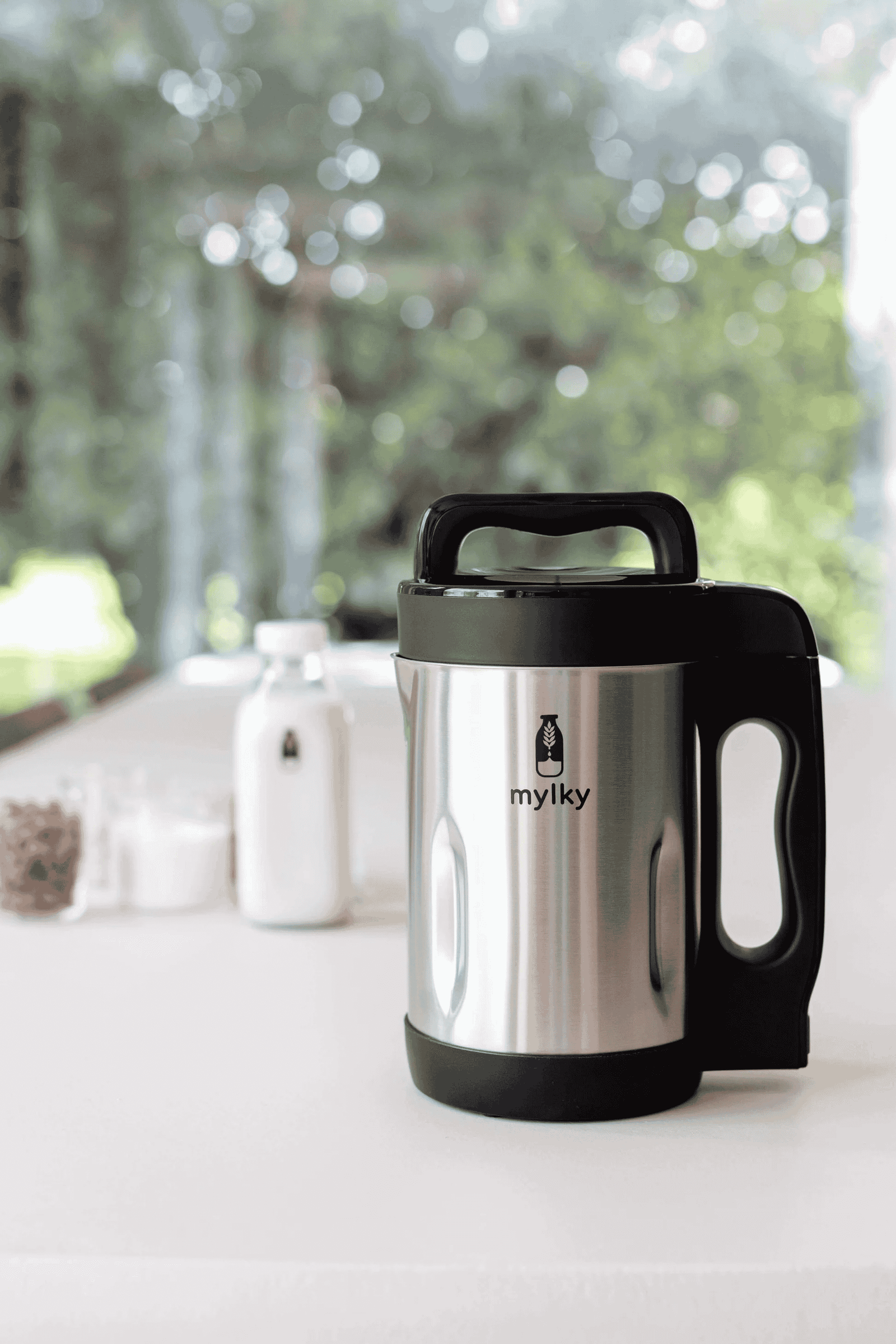
- Use the mini jug for coffee milk - Standard homemade milk is sometimes a bit thin for coffee, which is where the Mylky mini jug comes in very handy. The same amount of ingredients in a smaller volume of water produces a fuller, creamier milk, perfectly suited to coffee. You can easily adjust the proportions to suit your own taste, and in 60 seconds you’ll have fresh milk, with the same result every time.
- Foam at room temperature - Plant-based milk foams best when it’s slightly chilled or at room temperature. Only heat the milk after frothing.
Which milk for which coffee?
Not every type of milk suits every coffee. Here are a few combinations that work well:
For cappuccino or latte, homemade nut milk (almond or cashew) is a strong choice. The higher fat and protein content produces a creamy, stable froth. Use the mini jug for an extra creamy result.
For filter coffee or Americano, you can choose based on taste. Oat milk is the most neutral, whilst almond milk adds a light nutty note.
For iced coffee, almond milk and coconut milk work well. Coconut milk adds a summery flavour that works better cold than hot.
In conclusion
With the right type of milk and a few tweaks, plant-based milk in coffee is no compromise. Making it yourself gives you control over what goes in, it tastes fresher and costs a fraction of the supermarket price. Nut milk, the mini jug and a spoonful of nut butter: that’s all you need for a daily coffee that makes you happy!
Share


Martin Sundberg
What began in Martin Sundberg’s kitchen with a blender and a handful of nuts grew into Mylky – his way of making plant-based milk fun, tasty and mindful once again.
Related Articles
-

Is your homemade oat milk too slimy? You’re doi...
Martin SundbergPrep Time:
Servings:
Is your homemade oat milk too slimy? You’re doing it wrong
Martin Sundberg -

Plant-based milk for coffee: which one should y...
Martin SundbergPrep Time:
Servings:
Plant-based milk for coffee: which one should you choose?
Martin Sundberg -

Frothing plant-based milk: How to get a good froth
Martin SundbergPrep Time:
Servings:
Frothing plant-based milk: How to get a good froth
Martin Sundberg


