



Frothing plant-based milk: How to get a good froth
Martin Sundberg | | 5 minutes
Do you like a cappuccino with plant-based milk and a lovely layer of foam? It’s possible, and it’s easier to make than you think. The difference compared to cow’s milk lies in the approach: choosing the right type of milk, using the right technique and, with homemade milk, adding a few clever ingredients. That last bit is where it gets really interesting, because that’s where you’re in complete control.
What makes good foam?
Foam is created when air bubbles are trapped in a liquid. Proteins ensure those bubbles remain intact: they form a thin layer around each bubble that prevents the foam from collapsing. Fats make the foam creamy and give it a rich texture.
The more fat and protein in the milk, the better it foams. This applies to cow’s milk and it applies to plant-based milk. Milks that are naturally rich in fat and protein give the best results. With homemade milk, you can determine that composition yourself, tailored exactly to how you want to use it.
Which types foam best?
Each type of plant-based milk has its own characteristics when it comes to frothing.
- Soya milk has the highest protein content and therefore produces a stable foam. Fine, creamy, and it lasts a long time. Good enough for simple latte art.
- Nut milk (almond, cashew) is naturally rich in fat and protein, especially if you make it yourself with a higher concentration of nuts. Homemade almond milk foams surprisingly well and is the type of milk we recommend most for coffee.
- Oat milk has a mild, sweet flavour that pairs excellently with coffee. For frothing, oat milk does need a bit of extra fat, and this is precisely where making it yourself offers a major advantage: you add natural fats instead of industrial oils and stabilisers. A spoonful of nut butter or a dash of coconut oil is all you need.
- Pea milk has a relatively high protein content and a neutral flavour. It froths well and is growing in popularity.
- Coconut milk gives a creamy texture and a sweet, tropical flavour. It works best in iced coffee and coconut lattes.
The technique
Here are a few things that make all the difference, regardless of which type of milk you use.
- Start with cold milk - Cold milk gives you more time to incorporate air. Take the milk out of the fridge and froth it straight away.
- Keep the temperature low - Froth the milk until it is lukewarm, no more. Above 60 to 65 degrees, the foam becomes less stable. Froth first, heat afterwards.
- Stop in time - Frothing for too long makes the bubbles bigger rather than smaller. With a milk frother, 20 to 30 seconds is usually enough. With a steam wand: stop as soon as the jug feels lukewarm and the volume has visibly increased.
- Finish off the froth - Gently tap the jug a few times on the worktop and swirl it around. This breaks up large bubbles and creates a finer froth. Baristas do this as standard, even with cow’s milk.
Homemade milk, better foam
If you make your own plant-based milk, you have an advantage when it comes to frothing. You determine the composition and can tailor the milk precisely to what good foam requires: more fat, more protein, a fuller texture.
- Choose nut milk - Homemade nut milk is the best choice for frothing. The higher concentration of nuts provides more fat and protein, resulting in a milk that froths well in a completely natural way.
- Make oat milk suitable for frothing - Add a spoonful of nut butter (cashew or almond) or a dash of coconut oil per litre. It’s exactly what manufacturers of barista-style oat milk do, but with industrial oils and stabilisers. With nut butter, you achieve the same result naturally.
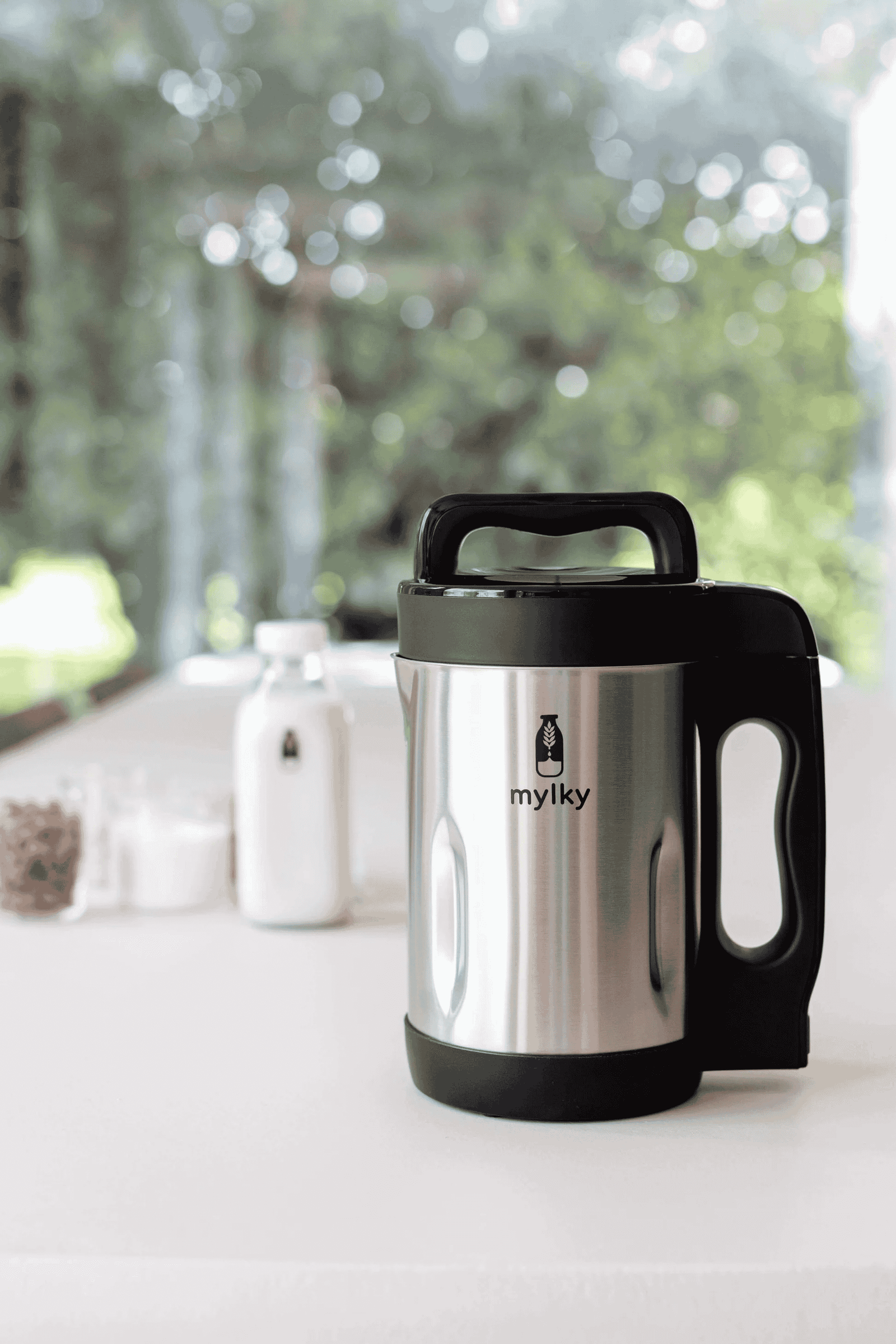
- Use the mini jug - Fuller-bodied milk foams better. With the Mylky mini jug, you can make a smaller quantity of extra-creamy milk in 60 seconds, ideal for coffee. The same amount of ingredients in a smaller volume of water produces a fuller-bodied milk that foams better, and you can easily adjust the proportions to suit your taste. Fresh every time, the same result every time.
- Froth first, heat afterwards - Froth the milk when it is slightly chilled or at room temperature. Only heat it afterwards.
Fresh, pure and a fraction of the price!
Many people prefer the fuller, more natural taste of freshly made plant milk in their coffee. Fresh milk tastes cleaner and purer than milk from a carton, without the aftertaste of stabilisers or other additives.
With homemade nut milk, the right proportions and a good technique, you’ll get creamy foam for your daily cappuccino. And all for a fraction of the price: homemade milk costs up to 10 times less than barista milk from the supermarket. No additives, fresh taste, complete control and ready in 60 seconds. That’s the kind of everyday convenience a Mylky machine is made for.
In conclusion
Foaming plant-based milk is all about making the right type of milk and the right technique. Use nut milk if you’re making it yourself, the mini jug for a creamier result, and nut butter if you want to froth oat milk. Keep the temperature low, stop in time, and froth at room temperature.
After a few attempts, you’ll get the hang of it, and you’ll have fresh coffee with foam every morning, just the way you like it.
Share


Martin Sundberg
What began in Martin Sundberg’s kitchen with a blender and a handful of nuts grew into Mylky – his way of making plant-based milk fun, tasty and mindful once again.
Related Articles
-

Is your homemade oat milk too slimy? You’re doi...
Martin SundbergPrep Time:
Servings:
Is your homemade oat milk too slimy? You’re doing it wrong
Martin Sundberg -

Plant-based milk for coffee: which one should y...
Martin SundbergPrep Time:
Servings:
Plant-based milk for coffee: which one should you choose?
Martin Sundberg -

Frothing plant-based milk: How to get a good froth
Martin SundbergPrep Time:
Servings:
Frothing plant-based milk: How to get a good froth
Martin Sundberg


