


Plant milk machine or blender: which is better?
Martin Sundberg | | 5 minutes
You want to make oat milk or almond milk yourself. You have the ingredients, now just the equipment. And then the question is: is a blender enough, or is a special milk machine worth it?
The short answer: both work. The longer answer: they don't work equally well, and which is better depends on how often you make milk and how much effort you want to put in.
How does the blender method work?
The classic way to make plant milk is simple. You put oats (or nuts, or rice) in a blender with water, let it run for a minute, and pour the mixture through a sieve or cheesecloth. What comes through is your milk, what remains is the pulp.
For oat milk, you don't need an expensive blender. A basic model works fine. For nut milk, you want something more powerful, especially if you don't soak the nuts. A powerful blender grinds almonds to powder, a cheap blender leaves chunks.
The whole process takes about 10-15 minutes: blending, straining, cleaning up. Most of the time goes into straining. You hang a cheesecloth over a bowl, pour in the mixture, and squeeze out the last drops. That squeezing is important, because otherwise a lot of milk stays in the pulp.
Where do you hit limits with a blender?
The blender method works, but has some annoyances.
- Straining is a hassle. The cheesecloth needs washing and drying, otherwise it starts to smell. The sieve gets clogged. And your hands get sticky from squeezing. Not a disaster, but after the tenth time it starts to annoy.
- The texture is coarser. No matter how well you strain, homemade milk from a blender always has a slightly grainy texture. You notice it in coffee. Less so in cereal.
- Oat milk easily gets slimy. Blend too long or use water that's too warm, and your oat milk gets a gluey texture. There are tricks against it (cold water, short blending), but it requires some experimenting.
- Frothing goes so-so. Want to make latte art with your homemade oat milk? That's going to be difficult. The milk lacks the fats and proteins that ensure stable foam. Barista oat milk from the supermarket has additives for that, your blender milk doesn't.
How does a plant milk machine work?
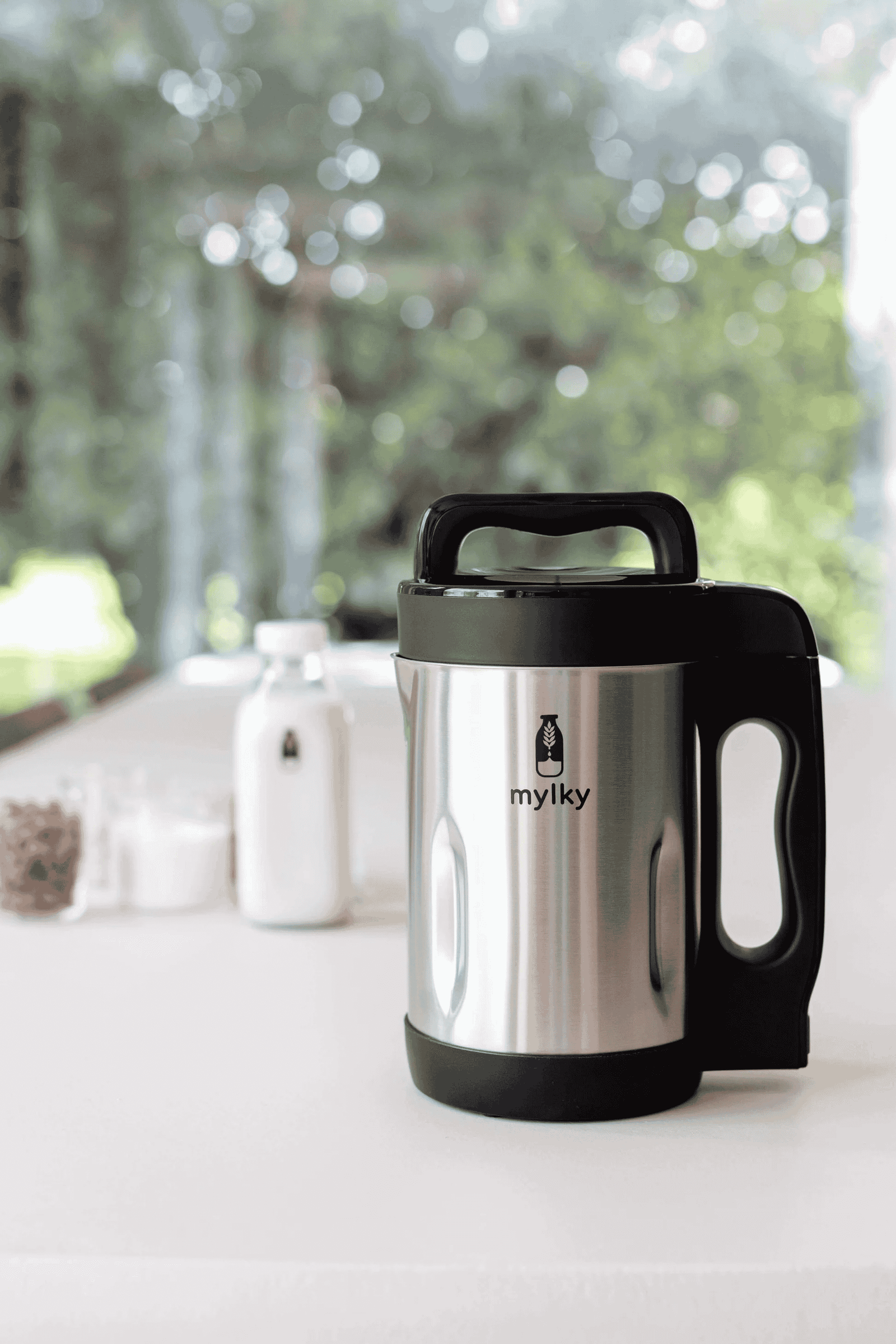
A milk machine combines blending and straining in one device. You put in the ingredients, press a button, and a minute later you have ready-made milk. The pulp stays behind in a filter, the milk flows through underneath.
Mylky is such a milk machine. It works with a powerful motor, sharp blades, and a built-in filter system.
The big difference with a blender: you don't need to strain. You press a button, wait a minute, and pour the milk into a bottle. You scoop out the pulp and rinse the machine. Total time: 2-3 minutes including cleanup.
Blender vs. milk machine: the comparison
| Blender | Milk machine | |
|---|---|---|
| Time per liter | 10-15 minutes | 2-3 minutes |
| Straining needed? | Yes, with cloth or sieve | No, built-in filter |
| Milk texture | Slightly grainy | Smooth and creamy |
| Frothing | So-so | Better (finer texture) |
| Multifunctional | Yes (smoothies, soup, etc.) | No, only plant milk |
When do you choose what?
There are different situations where you make different choices. Here's an overview.
- The blender is enough if: You make plant milk occasionally, maybe once a week or less. You already have a blender at home and don't want another appliance. Straining doesn't bother you, or you use the milk mainly in smoothies and oatmeal where texture matters less. And you're not in a hurry: 15 minutes for a liter of milk fits your routine.
- A milk machine is worth it if: You make plant milk several times a week. You want milk for coffee and expect a smooth texture. You hate straining and cleaning. Or you simply want it to be quick and easy, without hassle.
The calculation
A liter of plant milk at the supermarket costs many times more than making it yourself. The ingredients for a liter of homemade milk cost a fraction of the store price.
With a blender, you have no extra investment, but you pay in time. 15 minutes per liter, twice a week, is over 25 hours per year. What's that worth to you?
A milk machine like Mylky costs more upfront, but that investment pays for itself through savings on store-bought milk. The more often you make milk, the faster.
My advice
Start with a blender if you don't yet know if making plant milk yourself is for you. It costs little, you can experiment, and you find out if you stick with it.
Notice after a few months that you keep doing it, and that straining annoys you? Then a milk machine like Mylky is a logical upgrade. Not because a blender doesn't work, but because your time and patience are also worth something.
Share


Martin Sundberg
What began in Martin Sundberg's kitchen with a blender and a handful of nuts grew into Mylky – his way of making plant-based milk fun, tasty and conscious again.
Related Articles
-

Plant milk for babies and toddlers: what's allo...
Martin SundbergPrep Time:
Servings:
Plant milk for babies and toddlers: what's allo...
Martin Sundberg -

Lactose intolerance or cow's milk allergy: what...
Martin SundbergPrep Time:
Servings:
Lactose intolerance or cow's milk allergy: what...
Martin Sundberg -

Lactose Intolerance: What it is and What You Ca...
Martin SundbergPrep Time:
Servings:
Lactose Intolerance: What it is and What You Ca...
Martin Sundberg


