


Lactose Intolerance: What it is and What You Can do About it
Martin Sundberg | | 5 minutes
You eat a bowl of cottage cheese or drink a glass of milk, and an hour later you're dealing with stomach pain, bloating…or worse. Sound familiar? You might have lactose intolerance. Not a rare condition: estimates range from 2 to 10% of the population in Western Europe.
What exactly is lactose intolerance?
Lactose is the sugar naturally found in dairy milk. To digest lactose, you need the enzyme lactase. That enzyme breaks down lactose into two smaller sugars (glucose and galactose) that your intestines can absorb.
With lactose intolerance, your body produces too little lactase. The lactose therefore remains undigested in your intestines, where bacteria get to work on it. That causes gas, cramps, and diarrhoea.
Most people aren't born with lactose intolerance. As a baby, you produce plenty of lactase, because you live on breast milk. In many people, lactase production decreases as they get older. How quickly that happens differs from person to person and by origin. In Asia and Africa, 70-90% of adults have lactose intolerance.
Lactose intolerance vs. cow's milk allergy
This is a common confusion worth clearing up.
| Lactose intolerance | Cow's milk allergy | |
|---|---|---|
| What is it? | Your body produces too little lactase to digest lactose | Your immune system reacts to proteins in cow's milk |
| Symptoms | Stomach pain, bloating, diarrhoea, gas | Skin rash, itching, swelling, breathing problems, digestive issues |
| When? | 30 min to 2 hours after consumption | Within minutes to hours |
| How serious? | Unpleasant, not dangerous | Can be severe (anaphylaxis possible) |
| What helps? | Avoid lactose or take lactase tablets | Avoid all cow's milk products |
In short: with lactose intolerance, the problem is the sugar, with cow's milk allergy it's the protein. This difference is relevant, because with an allergy you have to avoid all dairy, while with lactose intolerance you can often tolerate small amounts.
How do you know if you have it?
The simplest test is to stop eating dairy for a while. Two weeks without milk, cheese, yoghurt, or ice cream. Do your symptoms disappear? Then you will know.
If you want to be sure, your doctor can order a hydrogen breath test. You drink a lactose solution and then blow into a device that measures how much hydrogen you exhale. Lots of hydrogen means the lactose isn't being digested properly.
What can you do about it?
You basically have three options.
1. Know your limits. Most people with lactose intolerance can tolerate small amounts of lactose. A splash of milk in coffee often causes no problems, a large latte does. Hard cheeses like Parmesan and aged cheeses contain hardly any lactose and you can usually eat them without issues. Yoghurt is often better tolerated than milk, because the bacteria have already broken down some of the lactose.
2. Lactose-free dairy products. In the supermarket, you'll find lactose-free milk, yoghurt, and pudding. They taste almost the same as the regular version. The only difference: lactase has already been added which has broken down the lactose. The downside is the price. It's often a bit more expensive.
3. Plant-based alternatives. Oat milk, soy milk, almond milk: none of these products contain lactose, because they're not made from animal milk. For many people with lactose intolerance, this is the easiest solution.
Plant milk: buy or make yourself?
Making it yourself is often cheaper than buying, although that depends on ingredients and local prices. But the real difference is in what goes into it. Shop-bought milk often contains stabilizers, emulsifiers, and sometimes added sugars. Homemade milk contains exactly what you put in: for example, oats and water, nothing more.
The classic method is a blender and a sieve or cheesecloth. Oats in, water on, blend, strain, done. Takes 10–15 minutes per litre, including cleanup. The result is well fresh and often tastes better than from a carton.
The downside of the blender method is… the hassle. The cheesecloth needs washing, the sieve gets clogged, and you're standing there squeezing over a bowl. You get used to it, but it's also a reason why many people stop doing it.
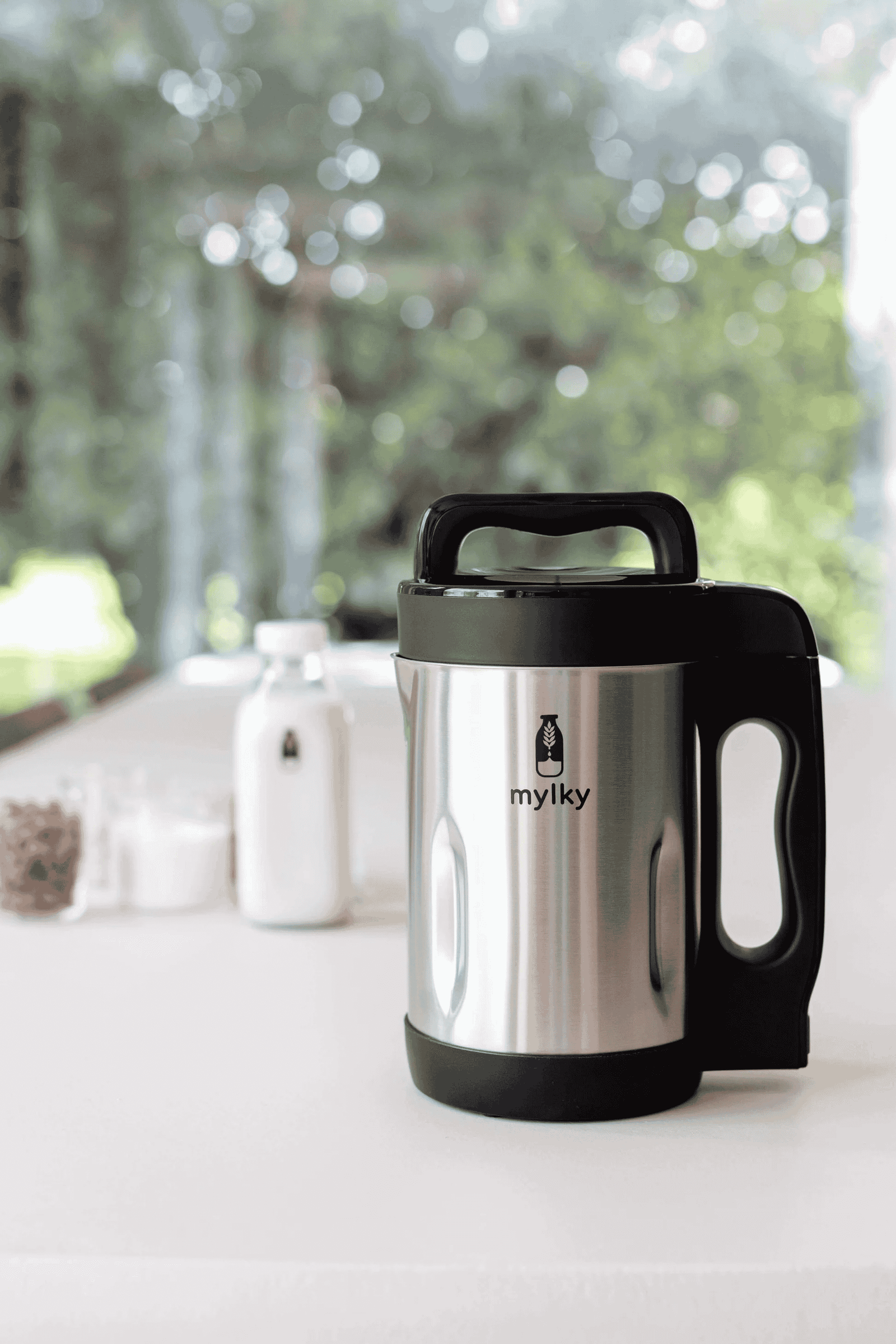
A milk machine like Mylky makes it easier. You put in the ingredients, press a button, and a minute later you have fresh milk. No straining, no mess. The investment quickly pays for itself in savings on shop-bought milk, but the real advantage is the pure convenience: making fresh milk takes you less than a minute.
Lactase tablets: an alternative
If you occasionally want to eat regular dairy without hassle, lactase tablets are an option. You take a tablet just before you eat dairy, and the enzyme helps your body digest the lactose.
They work, but not equally well for everyone. Some people notice a big difference, others barely any. It depends on how severe your intolerance is and how much lactose you eat.
You'll find lactase tablets at most pharmacies and some supermarkets, and online. There are store brands and specialty brands, and the price varies considerably. It's a matter of trying out which brand and dosage works for you. Consult your doctor or pharmacist if in doubt, especially if you take other medications or have underlying health conditions.
In conclusion
Lactose intolerance can be quite unpleasant but it is a manageable condition. Know your limits, choose lactose-free or plant-based alternatives, or take a lactase tablet if you want to eat "normally" occasionally.
Plant milk is the easiest solution for many people. Making it yourself gives you control over the ingredients, and with a Mylky machine it takes you less than a minute per litre.
Share


Martin Sundberg
What began in Martin Sundberg's kitchen with a blender and a handful of nuts grew into Mylky – his way of making plant-based milk fun, tasty and conscious again.
Related Articles
-

Is your homemade oat milk too slimy? You’re doi...
Martin SundbergPrep Time:
Servings:
Is your homemade oat milk too slimy? You’re doing it wrong
Martin Sundberg -

Plant-based milk for coffee: which one should y...
Martin SundbergPrep Time:
Servings:
Plant-based milk for coffee: which one should you choose?
Martin Sundberg -

Frothing plant-based milk: How to get a good froth
Martin SundbergPrep Time:
Servings:
Frothing plant-based milk: How to get a good froth
Martin Sundberg


