


Plant milk for babies and toddlers: what's allowed?
Martin Sundberg | | 5 minutes
Your child has a cow's milk allergy. Or you want to give plant milk for other reasons. The question is simple: is that okay? And if so, which kind?
The answer depends on age. What's fine for a toddler can cause problems for a baby. Here are the guidelines, by age group.
Important: this article is informative and does not replace medical advice. The nutrition of babies and toddlers has a direct impact on their growth and development. Always consult your doctor, pediatrician, or pediatric dietitian before making changes to your child's diet, especially with (suspected) allergies.
Babies 0-6 months
Here it's simple: no plant milk. Period.
The first six months, your baby gets only breast milk or infant formula (bottle feeding). Nothing else. Plant milk, not a single type, contains the right nutrients a baby needs at this stage. No oat milk, no soy milk, no almond milk. They lack essential fats, proteins, and vitamins for brain development and growth.
Does your baby have a cow's milk allergy? Then there are special hypoallergenic infant formulas. You get those through your doctor or pediatrician. Looking for an alternative yourself in the form of plant milk is dangerous and can lead to serious deficiencies.
Babies 6-12 months
Solid foods start, but breast milk or infant formula remains the main food until the first birthday.
Plant milk is still not a replacement for the bottle. You may use small amounts of plant milk in food preparation. Think of a splash of oat milk in porridge, or plant milk in a baby recipe. But it's an ingredient, not a drink.
Rule: until 12 months, breast or formula feeding is the basis.
Toddlers 1-3 years
From the first birthday, your child can drink cow's milk as the main milk source. And if you choose plant-based: that's possible too, but there are conditions.
Pay attention to three things: protein, calcium, and vitamin B12. Not all plant milk scores well on these points.
| Milk type | Protein/100ml | Suitable for toddlers? |
|---|---|---|
| Cow's milk | 3.4 grams | Yes (the standard) |
| Soy milk | 3.0-3.5 grams | Yes, best plant-based alternative in terms of protein |
| Pea milk | 3.0-3.5 grams | Yes, good alternative |
| Oat milk | 0.5-1.0 gram | Limited; low protein, compensate elsewhere |
| Almond milk | 0.4-0.5 gram | Limited; hardly any protein |
| Rice milk | 0.1 gram | Not recommended; traces of arsenic |
Soy milk and pea milk are the best plant-based alternatives for toddlers. They contain comparable protein to cow's milk. Oat milk and almond milk are allowed, but compensate for the low protein content with other sources like eggs, legumes, or meat.
Rice milk is not recommended for young children (up to about 4-5 years) due to possible traces of arsenic with daily use. Occasionally is fine, but not as a regular milk source.
Watch out with cow's milk allergy: some children with cow's milk allergy can also react to soy products. This can lead to intestinal issues (enterocolitis). Always consult your pediatrician before introducing soy milk to a child with cow's milk allergy.
What do you need to watch out for?
A few important points when choosing plant milk for your toddler.
- Fortification. Always choose a variant that's fortified with calcium, vitamin B12, vitamin D, and iodine. This is stated on the label. Unfortified plant milk lacks nutrients that children need for bone building and development. Homemade milk is also not fortified, so keep that in mind.
- Sugar. Check the sugar content. Sweetened varieties and flavors like vanilla or chocolate often contain lots of added sugars. Choose unsweetened.
- Allergies. A child with nut allergy can also react to almond milk. Soy milk can be a problem with certain cross-allergies. When in doubt: consult the pediatrician.
And homemade plant milk?
Yes, you can give homemade oat milk or nut milk to your toddler. But there are things to consider.
The advantage: you know exactly what's in it. No preservatives, no additives you don't want.
The disadvantage: homemade milk is not fortified. No added calcium, no B12, no vitamin D, no iodine. If you regularly give homemade plant milk, your child must get those nutrients from other sources. Consult a dietitian whether that works with the rest of the diet, or if a supplement is needed.
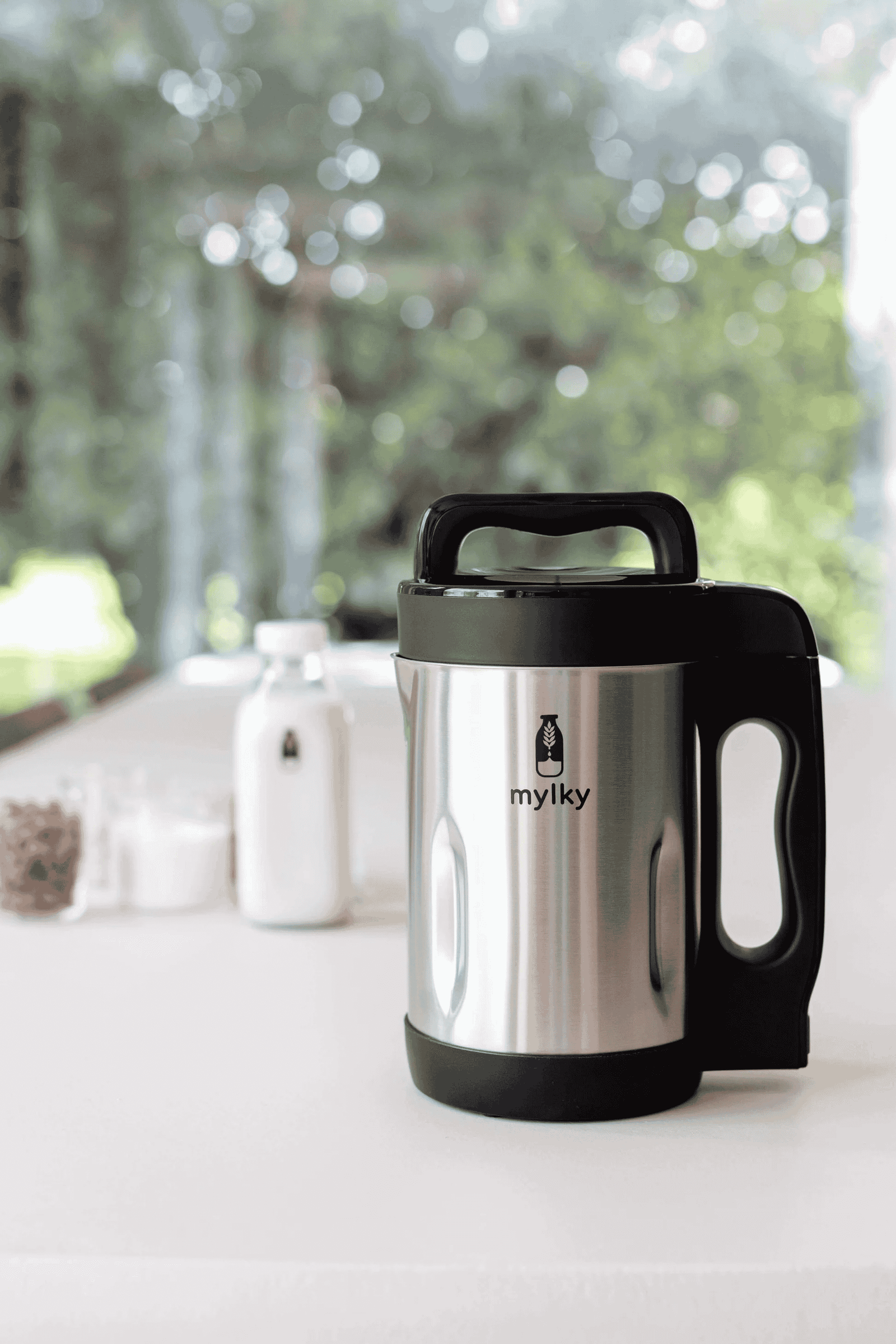
A milk machine like Mylky makes it easy to quickly make fresh milk. You have control over the ingredients: you can, for example, add dates for natural sweetness instead of refined sugar. But fortification remains a point of attention.
Common mistakes
These are the most common misconceptions we encounter.
- Giving plant milk to babies under 12 months as a replacement for breast or formula feeding. This can lead to serious nutritional deficiencies. Babies need specific nutrition that plant milk doesn't provide.
- Assuming all plant milk is equivalent to cow's milk. In terms of protein, calcium, and vitamins, there are big differences. Oat milk is not a substitute for cow's milk, soy milk comes closer. Always check the label.
- Buying the sweetened variety because your child finds it tastier. Understandable, but not wise. Get your child used to the unsweetened variety. Their taste buds will adapt.
When to see a doctor?
Consult your doctor or pediatrician if your baby or toddler has a (suspected) cow's milk allergy. They can have tests done and refer you to a pediatric dietitian who will create a nutrition plan.
Also if your child is growing less than expected, is often sick, or you suspect there are deficiencies: get it checked. A blood test can show if something is missing.
In short
Plant milk for babies under 12 months: no. For toddlers from 1 year: yes, under conditions. Choose fortified soy milk or pea milk for the best protein profile. Oat milk and almond milk are allowed, but compensate for the low protein elsewhere in the diet.
Homemade milk is fine, but not fortified. Keep that in mind. And when in doubt: consult a professional. They can advise what suits your child.
Share


Martin Sundberg
What began in Martin Sundberg's kitchen with a blender and a handful of nuts grew into Mylky – his way of making plant-based milk fun, tasty and conscious again.
Related Articles
-

Is your homemade oat milk too slimy? You’re doi...
Martin SundbergPrep Time:
Servings:
Is your homemade oat milk too slimy? You’re doing it wrong
Martin Sundberg -

Plant-based milk for coffee: which one should y...
Martin SundbergPrep Time:
Servings:
Plant-based milk for coffee: which one should you choose?
Martin Sundberg -

Frothing plant-based milk: How to get a good froth
Martin SundbergPrep Time:
Servings:
Frothing plant-based milk: How to get a good froth
Martin Sundberg


