


Making plant-based milk yourself: Here´s why I never buy milk cartons anymore
Martin Sundberg | |
I was standing in the shop with a carton of oat milk in my hand, reading the list of ingredients. Fourteen ingredients for something that is basically oats and water. Calcium phosphate, thickening agent, disodium phosphate... things I can barely pronounce, let alone know what they do in my body.
Then I thought: Surely this can be done more simply?
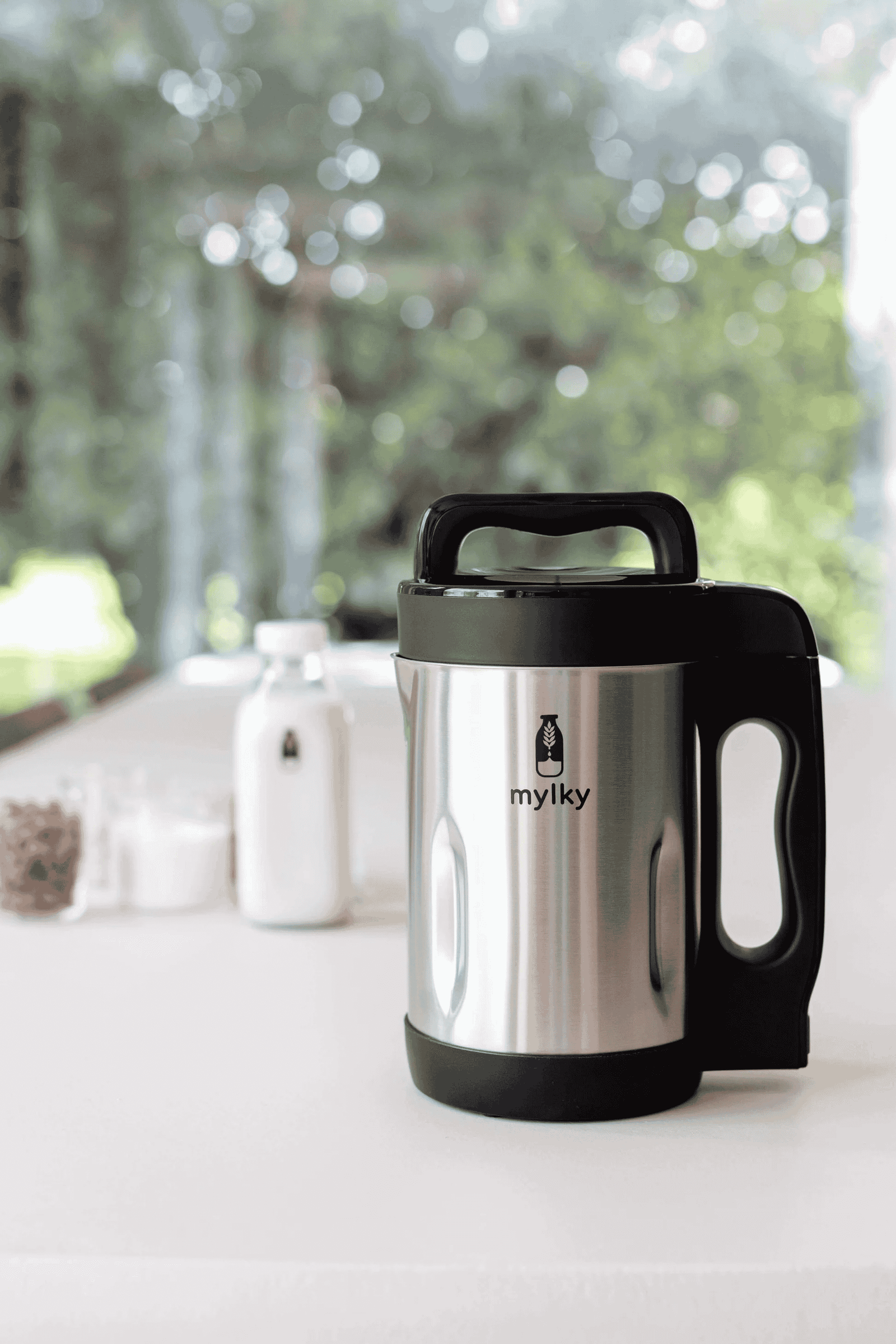
So, I started making plant-based milk by hand. Blender, sieve, done. It worked well – until the endless sieving started to annoy me. That frustration was ultimately the reason I created Mylky – a device that takes care of the entire process, from raw ingredients to milk, without all that hassle.
For the sake of transparency, I want to say that I am writing this blog for Mylky. But I also want to give an honest picture of what it's like to do it manually – because that actually works well too. For me, it's about making the milk myself, not necessarily how you do it.
What's actually in those packages?
Those fourteen ingredients are there for a reason. After all, unopened packages must remain stable for months at room temperature. That's why stabilisers, emulsifiers and preservatives are needed.
Is it dangerous? No, not necessarily. Those substances are not harmful – but they are also not necessary if you make fresh milk yourself and drink it within a few days.
The strange thing is that you pay around £3 for a litre that consists of 90% water and only 10% oats. The rest of the price goes towards packaging, logistics – and all the chemicals that make the water last for months.
That's why I make it myself now
Okay, the most important question: why would you want to make your own milk? I'm not going to say you have to, but here are the reasons why I can't do without it anymore.
Reason 1: You know exactly what's in it
One carton of oat milk: fourteen ingredients. Homemade oat milk: oats, water, maybe a pinch of salt. That's the difference.
No stabilisers, no emulsifiers, no ingredients you're unsure about. Just the basics. If you really want to know what you're consuming, making it yourself is the only way.
I don't think the added ingredients are necessarily scary. They're there for a reason – shelf life, texture, preventing separation. But I like to know what I'm drinking. And when I make it myself, I don't have to wonder about it. Oats, water, done. It doesn't get any simpler than that.
Plus: if you have allergies, intolerances or are generally sensitive, you know for sure that there's nothing in the milk that shouldn't or isn't supposed to be there. You don't have to pore over the small print, such as warnings about ‘may contain traces of’. You decide what goes in it.
Reason 2: It simply tastes better
Freshly made plant-based milk tastes different from the kind that comes in a carton. Clearer, cleaner, without that vague ‘carton’ taste. The difference is comparable to freshly squeezed orange juice versus juice from a carton or bottle.
Oat milk from the shop often has a slight cardboard-like aftertaste. It's not strong, but once you've tasted fresh oat milk, you'll notice it. Fresh oat milk tastes like, well, oats. Slightly sweet, cereal-like, rich. No aftertaste of chemicals or packaging.
The taste can vary depending on how you make it – sometimes a little runnier, sometimes creamier. That's to be expected. For me, it's not a disadvantage. It actually feels more ‘authentic’ that way.
Reason 3: Much cheaper
A kilo of oats costs about $3 and makes about 10 litres of milk. The same 10 litres in cartons costs between $22 and $40. That's a big difference.
Let's do the maths. Say you drink a cup of coffee with a generous splash of milk every day, as well as a smoothie with plant-based milk. That quickly adds up to a litre a day. That's 30 litres a month. In cartons, you pay between $66 and $120 for that. Homemade oat milk costs $9 for the oats. The difference is significant.
If you drink around three to four litres a week, it starts to get really interesting. Do you drink less than that? Then it may not be worth the effort, as you will only save a few dozen pounds a month. But with daily use, the difference is quickly noticeable.
And I'm not talking about nuts. Almond milk and cashew milk are more expensive to make yourself than oats, but still cheaper than those barista varieties for $4.50 per litre.
Reason 4: Less packaging waste
One bag of oats or nuts versus dozens of cardboard cartons per year. The cartons add up..
If you drink four litres per week – not even that much – that's over 200 cartons per year. Two hundred cardboard cartons that have to be sorted and recycled. When you make it yourself, it might be 20 bags of oats per year. The difference is huge.
I'm not one to bring up environmental arguments in everything, but here it's hard to ignore the facts: fewer packages mean less waste. If you think it's important, you decide for yourself. For me, this is a nice, tidy side effect, but not the main reason.
Reason 5: Experiment with flavours
Oat milk, almond milk, cashew milk, combinations of bases – you can do whatever you want. Dates for sweetness, cocoa for chocolate milk, vanilla for exclusivity. No packaged purchase gives you that freedom.
You can also adjust everything throughout the production process. A splash of water if it's too thick, an extra date if you want it sweeter. You never have that control with packaged products from the shop.
For example, I make oat milk with a date and a pinch of salt for my coffee – creamy and just the right amount of sweetness. For smoothies, I make thin almond milk without additives. And if I'm in the mood forchocolate milk, I throw in some cocoa and a date with the cashews. Every time, I get exactly what I want at that moment in my day.
You don't get that kind of flexibility with packaged products. You choose from what's on the shelf, and that's it. When you make it yourself, you creatively decide what you want to make.
Making plant-based milk yourself: two methods
Now that you know the good reasons why you might want to make your own milk, the question is: how do you go about it? There are two methods: either the classic manual method or using a device such as Mylky. Both methods work, but the main difference lies in how easy you want the process to be.
Manually (the classic method)
This is how I started. You need a blender and a nut milk bag or a fine sieve. That's all.
You put nuts or oats in the blender, pour in water, blend until smooth, and then strain. In theory, it's simple. In practice, the straining is really tedious. You really have to squeeze and press hard to get all the milk out, and you always have a lot left over that you have to store somewhere or throw away.
It takes around 10 to 15 minutes, plus cleaning up. And the results vary. Sometimes you get perfectly smooth milk, sometimes there are still bits left.
Advantages:
- No extra investment if you already have a blender
- Good for trying out whether homemade is for you at all
- You have the most control over the process
Disadvantages
- That straining is really hard work
- Inconsistent results
- Lots of leftovers (what do you do with them?)
- Cleaning up takes time
- Difficult to keep going
Let me be honest. I did this for about three weeks. Then I had had enough. I get tired just thinking about how I had to squeeze that nut milk bag over the sink every time, with my hands full of wet pulp, and then clean everything up! Sure, it worked, but I stopped doing it because it was too much fiddly fuss..
With Mylky (the reason I created Mylky)
The frustration with straining was the exact reason I created Mylky. I just wanted fresh plant-based milk without the hassle. Just blend and strain in a device that does everything for you.
You throw in your ingredients, press start, and a minute later you have milk. The device filters while it blends, so you no longer need to strain manually.
The result is consistent. The same every time. For me, that was important because I wanted to be able to stick to the routine – and that consistency makes it easier.
Advantages:
- No hassle with straining
- Ready quickly (1 minute)
- Consistent results
- Much easier to stick with
- Less mess
Disadvantages:
- The purchase price is something to consider – I'm not going to pretend that it can't be a barrier
- Another kitchen appliance
- If you drink less than 3 litres per week, it might be a bit of overkill
Who is Mylky suitable for?
- If you use plant-based milk daily – as a pure drink, in your coffee, in porridge, baking, or anything else
- If you really want to stick with it – not just try it for three weeks and then give up.
- If you're tired of manual straining
- If predictable results are important to you
Is this something for you?
Let's be honest, Mylky is not for everyone.
It is NOT for you if:
- You only drink plant-based milk occasionally (in which case a carton is simply more convenient)
- Long shelf life is important (fresh milk lasts 3–4 days)
- You don't want extra chores in the morning
- Your budget is very tight and you are already happy with cartons
It IS for you if:
- You use plant-based milk daily
- You want to know exactly what you are drinking
- You are prepared to spend 1 to 15 minutes on it (depending on how you do it)
- You want to reduce waste
- The fresh taste appeals to you
- You like the idea of long-term savings on your plant milk
My opinion
I don't buy cartons anymore. Not because I feel morally superior or because everyone should do it, but simply because I think the fresh taste of homemade milk is better, and it's very nice to know what's in it.
Do you have to do this too? No, of course not. If you think cartons from the shop work well for you, that's fine. Really. But if you're curious about making it yourself, I hope my little review here has helped you decide if it's something for you.
My recommendation: try making your own milk manually first if you have a blender. Buy a bag of oats for $3and see if you like the concept at all. If the straining frustrates you too, then Mylky might be interesting. If you think the manual method works well, you can definitely continue with that.
If you want to experiment with flavours, you can find different recipes at mylky.com.au. We have everything from classic oat milk to varieties with cashews and dates, almonds and vanilla, and more. You get everything in exactly the right proportions for great results.
Whether you make your milk manually or with Mylky, you can rest assured that both methods work. It's not about the method – it's about knowing what you're drinking and that it tastes good. The rest is just details.
Share


Martin Sundberg
What began in Martin Sundberg's kitchen with a blender and a handful of nuts grew into Mylky – his way of making plant-based milk fun, tasty and conscious again.
Related Articles
-

Is your homemade oat milk too slimy? You’re doi...
Martin SundbergPrep Time:
Servings:
Is your homemade oat milk too slimy? You’re doing it wrong
Martin Sundberg -

Plant-based milk for coffee: which one should y...
Martin SundbergPrep Time:
Servings:
Plant-based milk for coffee: which one should you choose?
Martin Sundberg -

Frothing plant-based milk: How to get a good froth
Martin SundbergPrep Time:
Servings:
Frothing plant-based milk: How to get a good froth
Martin Sundberg


